





For years, the idea of an ultrathin mobile has been tied to inevitable concessions. Less internal space usually translates to smaller batteries, limited cooling systems, or less ambitious cameras. That's why, whenever a smartphone boasts of minimal thickness, the same question arises: to what extent does it compromise performance? With the Motorola Signature, the brand promises to break that association and demonstrate that sleek design does not have to be at odds with power.
In this in-depth analysis of the Motorola Signature we examine its proposition in detail: a phone that bets on an extremely slim profile without neglecting key aspects such as autonomy, system fluency and photographic quality. Beyond the first impression —lightness, careful finishes and premium aesthetics— what really matters is how it behaves in daily use. Does it respond reliably to demanding tasks? Does it maintain good thermal management? Can its battery last a full day?
Throughout this review of the Motorola Signature we address design, display, processor, software and real-world usage, with concrete tests and clear conclusions. Because an ultrathin mobile may look attractive at first glance, but only sustained performance confirms whether we are looking at a balanced proposal or at another device that sacrifices too much for aesthetics.
Ultrathin design and premium finishes: elegance with a small imbalance
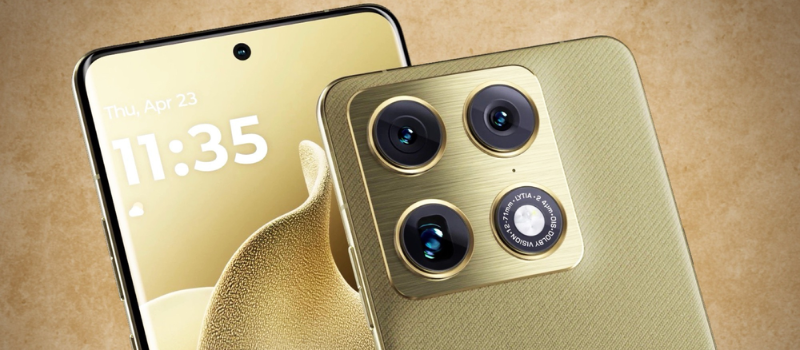
Motorola has focused all attention on one very specific point of the Signature: its extreme thinness. And the truth is that it's hard to ignore it. At 6.99 mm at its thinnest, the Motorola Signature enters directly into the group of the sleekest ultrathin mobiles in its category. At a glance it conveys lightness, sophistication and a clear intention to differentiate itself by design, even compared to proposals like the iPhone 17 Pro. It is a smartphone that bets on visual impact without renouncing to specifications typical of 2026.
Now, that thinness has nuances.
As is the case with many current smartphones, the camera module breaks the uniformity. On the rear, the thickness increases markedly at the upper area, almost doubling to accommodate a system with main sensor, dual setup, possible 50 MP sensor, Sony Lytia technology (Lytia 828), wide-angle options, ultra-wide angle, telephoto, optical zoom, 3x, and even references to super zoom or 100x digital depending on the mode. This AI-powered photography system, compatible with portrait mode, Dolby Vision and advanced processing, forces a redistribution of internal weight.
This creates a slight imbalance: the part where cameras and sensor are located feels heavier than the lower part. In daily use it isn't always evident, but when taking vertical photos with one hand the difference is clearly noticeable, especially when using zoom or the ultra-wide angle.
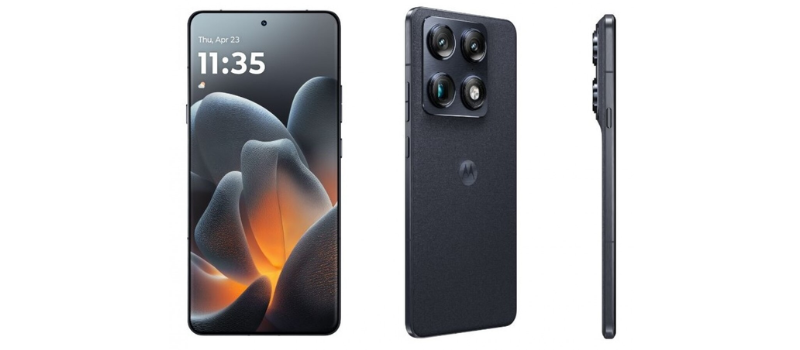
Beyond that detail, the ergonomic work is well resolved. Despite its straight edges, the phone does not convey an uncomfortable or "sharp" feeling. Motorola has softened both the front and the back, achieving a pleasant and smooth feel. The construction reinforces that impression of quality: solid aluminum body, rear with a rubbery finish that improves grip and reduces slips, and a front protected by Corning Gorilla Glass Victus 2.
The front makes the most of the space, aligned with the body's minimal profile. On the right side, the buttons are accessible. On the left appears the dedicated AI button, linked to Moto AI. It does not allow customization, a debatable decision in a high-end that can cost around 999 euros, with 16 GB of RAM, storage UFS 4.1, IP69 rating and several years of guaranteed updates.
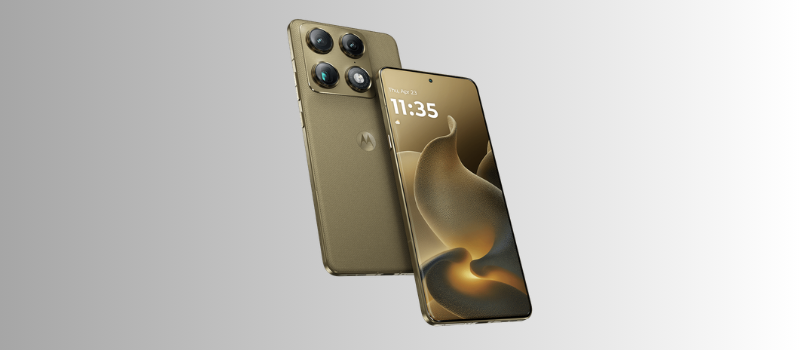
A carefully crafted Pantone design, sturdy and clearly focused on standing out without losing its identity.
6.8″ LTPO AMOLED display: extreme brightness and sharpness that set it apart
If there is one area where the Motorola Signature mounts a differentiating component, it is its display. This new Motorola Signature opts for a 6.8-inch LTPO AMOLED panel that, from the first power-on, makes it clear that we are not looking at an ordinary panel. The sharpness is outstanding, with Super HD resolution and a pixel density that enhances every detail in text, video and games. The visual experience is clearly designed to compete with the best camera and the best panels in the premium segment.
The contrast is deep, with intense blacks and balanced colors thanks to careful calibration. There is no artificial oversaturation. The panel can reach up to 165 Hz in compatible games, while in daily use it intelligently adapts up to 120 Hz, ensuring smooth fluidity. This combination makes the Motorola Signature an ideal device for both multimedia and demanding gaming.
One of the main arguments is its peak brightness of 6,200 nits. Outdoors, under direct light, the visibility remains excellent. The system automatically adapts brightness according to the environment, optimizing consumption and readability. Even indoors with low light the behavior is correct, though it could fine-tune the minimum brightness a bit more for prolonged night reading.
The tactile response reaches 360 Hz sampling, which improves accuracy in swipes and competitive gaming. The slim bezels and the 2.5D finish reinforce the premium feel and the front utilization. All this in a 186-gram body that balances design and technology.
In biometrics, the under-display ultrasonic reader is fast and reliable. The front camera system integrates without interfering with the visual experience, maintaining coherence with the rear camera system. In short, the Motorola Signature's display not only stands out for technical figures, but for offering a visual experience worthy of the highest tier of 2026.
Bose-branded stereo: power and balance in an ultrathin body
I reiterate the thinness because it is even more commendable here. When a manufacturer reduces the thickness of a smartphone to the limit, all components must adapt to that limited space. And speakers are usually among the first to suffer. That's why, before testing the Motorola Signature, it was reasonable to think the sound would be decent... nothing more. The surprise has been notable.
The stereo system offers an experience well above what you would expect in such a slender phone. The collaboration with Bose is not a simple marketing detail: it is perceived in clarity, channel separation and the reinforcement of bass. The audio has body, enough volume and hardly distorts even when pushed to the maximum. It can reach a sound pressure level of up to 89 dB, a figure that, in practice, translates to more than enough power to watch series, play games or listen to music without missing an external speaker.
Additionally, the phone handles vibrations well. There are no annoying resonances or a chassis trembling when you raise the volume. The overall balance is very well achieved, with defined highs and present lows that do not overwhelm the rest of the frequencies.
With Bluetooth headphones, the experience remains at that level. It is compatible with Dolby Atmos and allows adjusting different sound profiles to suit personal preferences. It also supports a wide variety of wireless codecs, making it easy to get good quality with most headphones on the market. The connection is stable and the sound clean and detailed.
That said, it does not include a traditional audio jack. To use wired headphones you need a USB-C adapter with an external DAC. Once past that step, the quality is balanced and rich in nuance, without shrillness.
High-end performance: uncompromising power in an ultrathin form
The thinness can raise doubts about the internal capacity of a smartphone, but in this case they are cleared from the first moment. The Motorola Signature offers performance typical of the current top tier. In daily use it feels agile, instantaneous. There are no delays when opening apps, nor micro-stutters when switching between tasks. Everything flows naturally.
The driver of this behavior is the Snapdragon 8 Gen 5, a processor that competes in the top division. The combination of raw power and optimization is well handled. The system responds quickly, games start without hesitation and can run with the most demanding graphics settings. Although not exclusively aimed at gamers, it performs without difficulty even in heavy titles and long sessions.
One of the standout points is thermal management. In such a thin device, controlling heat is key. Motorola manages to keep temperatures stable even under heavy load. In prolonged stress tests, performance held up with 98.2% stability for half an hour, a figure that reflects real consistency, not just peak power. In practice, this means it does not drastically reduce the processor frequency after a few minutes of demanding use.
The experience goes beyond the processor. In connectivity, the Motorola Signature is up to the mark of what is expected in a premium terminal. It includes WiFi 7 and Bluetooth 6, ensuring speed and stability on compatible networks. GPS locks on quickly and with accuracy close to three meters, something appreciated in urban navigation. During calls, noise cancellation works effectively, keeping voices clear even in noisy environments.
No connectivity problems were detected, neither under WiFi networks nor on 5G connections. All in all, the Motorola Signature shows that ultrathin design is not at odds with solid, stable performance ready for any everyday or demanding scenario.
Outstanding battery life of the Motorola Signature: 5,200 mAh that defies the ultrathin format
When talking about a phone only 6.99 mm thick, it seems natural to think of a squeezed battery. However, the Motorola Signature breaks that prejudice with a very well-planned energy proposition. The key lies in two factors: a silicon-carbon battery with good capacity for its size and solid hardware-software optimization that manages consumption intelligently.
On paper, the 5,200 mAh already catches the eye. Even more so when compared with other ultrathin models. The Samsung Galaxy S25 Edge includes 3,900 mAh with a thinner profile, while the iPhone Air sits at 3,149 mAh with an even thinner body. The Motorola is about one millimeter thicker than some direct rivals, but in exchange offers between 30% and 65% more capacity. In numbers, the difference is clear.
In practice, the experience confirms those good feelings. On intense days outside the home —with 5G active, music playback, social networks, browsing and streaming video— the phone finished the day with a comfortable margin, typically between 20% and 40% remaining. With combined and reasonable use, it can approach two days without recharge. The estimate of active screen time rounds to 7 or 8 hours, a very competitive figure for this segment.
Idle consumption is well contained: around 6% during eight nighttime hours. Under maximum demand, such as long gaming sessions with the GPU pushed to the limit, consumption increases noticeably and temperatures can reach 45 °C after an hour of continuous use. Still, performance does not collapse.
Charging is not left behind. It is compatible with Qi 2, which makes it easy to use with magnetic accessories like MagSafe. Wired, Motorola claims up to 90 W; in real tests it approaches that figure. Wireless charging reaches 50 W and even allows 10 W reverse charging to power other devices.
Android 16 analysis and optimized experience: lightweight software, customizable and with desktop mode
The Motorola Signature arrives updated to Android 16, an important point for those who value having the latest OS from day one. It’s not just about numbers: starting from a recent version ensures access to new features, current security patches, and a solid base for future updates.
On Android, Motorola applies its own customization layer. The good news is that it's not heavy or invasive. It keeps an aesthetic close to Google's original vision, with a clean and fluid interface. There is no sense of bloat or unnecessary animations that slow things down. The hardware is not penalized by the software, something that doesn't always happen on other devices.
Regarding preinstalled apps, the level is reasonable. Beyond some typical Meta and Microsoft tools, there isn't an excessive accumulation of programs that require time removing unwanted content. The setup is swift and the system is ready in a few minutes.
One of the strengths is customization capability. The Motorola Signature allows adjusting themes, icons, visual styles and multiple parameters inherent to the brand. There are dozens of options to tailor the experience to each user's taste without needing external launchers. In addition, classic gestures remain, such as wrist twist to open the camera or shaking to activate the flashlight. They are small details that, once integrated into routine, are truly practical.
Energy optimization is also well done. The system controls background consumption and manages resources efficiently, contributing to the good autonomy the device offers.
In the AI department, the phone integrates both Gemini tools and the brand's own offering: Moto AI. The latter includes features such as notification summaries or an assisted diary with contextual information. However, its contribution does not always make a clear difference compared to what the Google ecosystem already offers. Also, the dedicated physical button on the left side does not allow reassignment: it activates Moto AI or remains without function. A decision that limits flexibility.
Where it clearly stands out is in desktop mode. Thanks to the DisplayPort output via USB-C, the Motorola Signature can connect to an external monitor and offer an expanded experience, with a full desktop environment and advanced tools. It even allows using the phone's screen as a touch panel, similar to solutions like Samsung DeX. For travel or light work, a monitor and a keyboard are enough to have a functional environment without a laptop. An addition that reinforces its versatility and provides real differentiating value.
Conclusion: real balance in an ultrathin form
The Motorola Signature is not just a design exercise. Its slim profile catches the eye, but what truly convinces is the whole package: a bright and sharp display, surprising sound, solid performance and a battery that exceeds expectations for its thickness.
There are no major compromises. It runs smoothly, endures demanding days and offers extras such as advanced fast charging and desktop mode. Even with small nuances —such as the dedicated Moto AI button— the overall experience is very positive.