



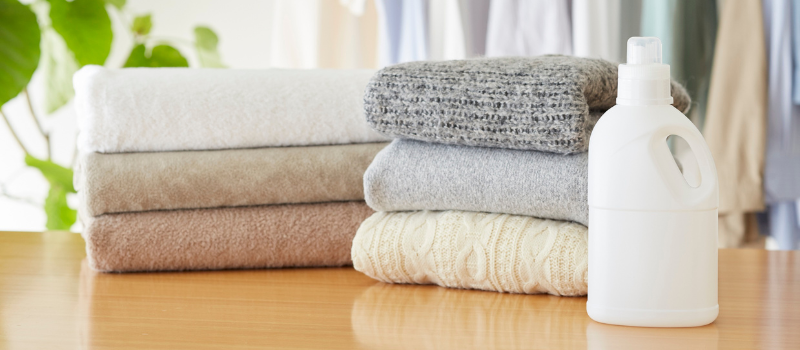
Drying off with a good towel after a shower may seem like a minor detail, but it actually makes a big difference in the daily routine. Texture, absorbency, size, and softness are aspects that directly influence the experience, even though they often go unnoticed. It's not just about aesthetics or fashion: a quality towel provides comfort, cares for the skin, and ensures greater durability with constant use.
In the current market, the variety of options can be overwhelming. From Egyptian cotton towels to microfiber or bamboo models, ranging in different weights, finishes, and prices, the offer is as broad as it is confusing. And although many promise to be “the best,” not all live up to what they advertise.
Therefore, knowing the fundamental criteria to identify a good-quality towel is key before making any decision. This article gathers all the information you need to avoid mistakes: from the most recommended materials, to how to read labels or what characteristics to check by touch.
If you’re thinking about updating your bathroom set or simply want to invest in towels that are really worth it, this guide is for you. We go step by step so you can choose with confidence and without surprises.
Why Is It Important to Choose a Towel Wisely?
It may seem like an unimportant detail, but having the best towels changes the way we experience everyday moments such as stepping out of the shower, washing our hands, or drying our face. Choosing the right towels is not just a cosmetic issue: it directly affects daily comfort, skin health, and also your wallet in the long term.
Impact on daily experience
Starting the day using a rough towel, poorly absorbent, or one that leaves lint is not pleasant at all. On the contrary, a durable, soft towel with good absorption transforms that moment into a comfortable one, almost like a small personal luxury. It’s these details that elevate the daily routine. The best bath towels feel good to the touch, wrap the body softly, and make drying quick and effective.
Long-term savings
Investing in quality towels, especially if they are made with 100% cotton, may seem more expensive at first, but it offers real savings over time. Low-quality towels wear out quickly, lose their softness, and absorb less and less, which forces frequent replacements. In contrast, a good towel, made with sturdy and durable materials, maintains its properties wash after wash, avoiding unnecessary purchases and repeated expenses.
Benefits for the skin and effective drying
Our skin is constantly exposed to external factors, and using an inappropriate towel can worsen the situation. Very rough textures or poor-quality synthetic fabrics can irritate, especially in people with sensitive skin. In addition, a towel that is not very absorbent makes effective drying difficult, which can lead to prolonged moisture in areas such as the feet or body folds, promoting the appearance of bacteria.
Therefore, choosing the best bath towels, preferably made with 100% cotton, is not a luxury, but a smart choice that cares for your daily well-being. A good towel not only dries: it protects, comforts and accompanies. Its choice deserves all your attention.
Types of Towels According to Their Use
Not all towels are the same, nor are they designed for the same purpose. Each type has a specific function and particular characteristics that are worth knowing before making a purchase. Choosing the right model according to the intended use not only improves the daily experience, but also extends the textile's life.
Below, we present the most common types of towels and their main applications:
Bath towels
They are the most used and, in general, the largest in the home. They are designed to dry the full body after a shower or bath, so they must have excellent absorbency, be soft to the touch, and large enough to wrap the body comfortably.
The standard size usually ranges around 70 x 140 cm, although there are also extra-large versions known as “bath sheets,” which offer greater coverage. A good bath towel should combine softness, thickness, and durability, without becoming too heavy when wet.
Hand towels
Smaller and more manageable, hand towels are designed to dry this part of the body after washing. They are commonly placed in daily-use bathrooms and courtesy sinks.
Their typical dimensions range between 40 x 60 cm and 50 x 80 cm. Although they do not require the same level of softness as a bath towel, they should offer good absorbency and be resistant to frequent washes, since they are changed more often.
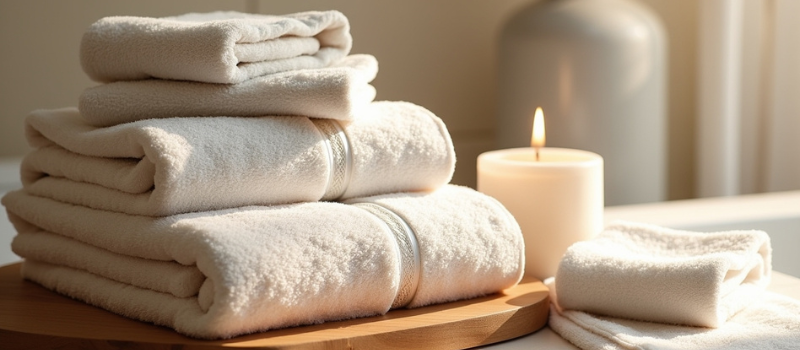
Facial towels
Especially delicate, facial towels are designed to dry the skin of the face without causing irritation or unwanted reactions. For this reason, it’s key that they are made with soft, hypoallergenic, high-quality materials.
These towels are usually square or small in format (approximately 30 x 30 cm). It is advisable to have several and wash them frequently, as they come into direct contact with the face, where the skin is more sensitive and prone to problems if not kept clean.
Guest towels
These towels combine functionality and presentation. They are hand or facial towels laid out especially for guests, and are often chosen with decorative details or in neutral colors to harmonize with the bathroom.
They should remain pristine, as they reflect care and attention toward guests. Although their use is usually occasional, quality remains important, for hygiene reasons as well as for a good impression.
Beach or pool towels
Designed for outdoor use, these towels stand out for their larger size and for being made from materials that dry quickly and resist sun, sand, and chlorine. The most common measurements range around 80 x 160 cm or more, which allows you to lie on them comfortably.
Unlike bath towels, they tend to be lighter and thinner, to facilitate transport and drying. Some feature colorful designs, striking prints, or summery motifs, which also makes them an attractive visual accessory for trips to the sea or the club.
Key Factors to Identify a Quality Towel
At first glance, many towels can seem similar. However, there are important differences in materials, construction, and finish that determine their quality, durability, and behavior with daily use. If you’re looking for a towel that’s really worth it, there are certain factors worth analyzing before buying. Below, we explain the most relevant ones.
The type of cotton: Egyptian, Turkish, organic…
The base material is one of the most determining elements. Most quality towels are made with 100% cotton, but not all cottons are the same.
- Egyptian cotton: known for its long, soft fibers, it offers a luxurious feel, great absorption, and high durability. Ideal for those seeking a premium experience.
- Turkish cotton: also long-fiber, but with a slightly lighter texture. It dries quickly and maintains softness even after several washes. It is perfect for humid climates or for those who prefer lighter towels.
- Organic cotton: grown without pesticides or chemicals, it is a more sustainable option. Its quality depends on the manufacturing process, but often combines softness, skin safety, and environmental respect.
Choosing the right type of cotton makes a noticeable difference in daily use and in the towel’s durability.
Weight (GSM): what it means and how it influences
The weight, known by its English acronym GSM (grams per square meter), indicates the weight of the fabric. It is one of the most reliable indicators of a towel's quality and performance.
- Towels between 300-400 GSM: light, thin, ideal for gym or travel, but less absorbent.
- Between 400-600 GSM: a good balance between absorption, weight, and drying time. They are versatile and suitable for home.
- More than 600 GSM: very dense, soft and absorbent. They offer a luxurious feel, though they take longer to dry and are heavier.
The higher the GSM, the more fabric the towel has, which usually translates to better quality… provided the fabric is good.
Texture and type of loop
The loop is the visible part of the fabric: those small rings or loops that make up the towel surface. Its shape, density, and height directly influence absorption and softness.
- Long and dense loop: provides greater absorption and a fluffy feel. It is typical of high-end towels.
- Short or flat loop: dries faster, but is less fluffy. Often found in more economical or frequently used towels.
- Twisted or combed loop: offers greater resistance to wear, ideal for daily use and frequent washes.
A good texture to the touch is a sign of quality, but it’s also important to ensure the loops are well formed and do not unravel easily.
Seams and finishes
Although many do not notice, the details on the edges say a lot about a towel's quality. Reinforced seams, symmetrical hems, and clean finishes are indicators of good craftsmanship. Poorly finished towels tend to fray soon and lose their shape with washing.
It’s also worth checking if it includes a hanging loop, as this improves its functionality in the bathroom or in small spaces.
Absorption and softness
A towel can be nice to look at, but what really matters is its performance. Absorption is key: it should dry well without rubbing. Softness, on the other hand, influences comfort and skin care.
Some towels may feel soft at first due to chemical treatments, but that softness disappears after the first washes. Combed cotton or long-fiber towels maintain their texture longer, without losing effectiveness.
Guide to the Most Common Materials and Their Advantages: Which to Buy
When choosing a quality towel, one of the most important aspects to consider is the material it is made from. Not all fabrics offer the same performance or adapt equally to daily uses. Some prioritize softness, others quick drying, durability, or even environmental impact.
Knowing the most common materials and their advantages will help you make a better decision, according to your needs and preferences. Below, we review the four fabrics most used in towel manufacturing and what each brings.
100% Cotton
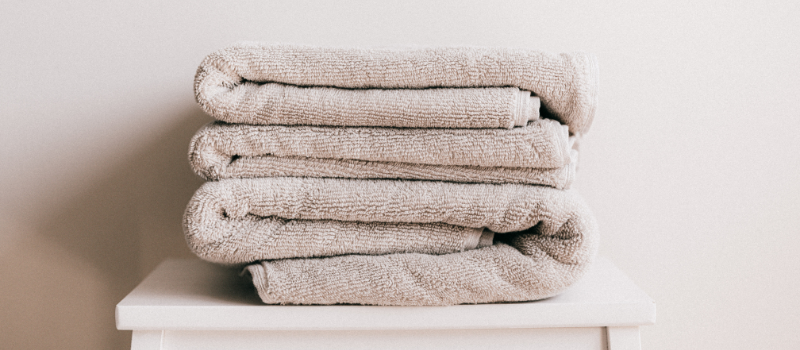
It is, without a doubt, the star material in towel manufacturing. 100% cotton stands out for being natural, soft, absorbent, and breathable. It is ideal for direct skin contact, even for people with sensitivity or allergies.
Within this category, there are different varieties such as Egyptian cotton, Turkish cotton, or organic cotton, each with particularities regarding softness, resistance, and absorption (as we saw in previous sections).
Main advantages:
- Excellent absorption capacity.
- Nice feel to the touch.
- Good durability if properly cared for.
- Ideal for daily use and for bath towels.
Pure cotton towels are also easy to maintain, and with proper basic care (gentle washing, without industrial fabric softeners), they preserve their properties for a long time.
Bamboo
Bamboo is an alternative that has gained popularity in recent years for its ecological character and its natural antibacterial properties. Although it is not pure bamboo, but a blend of fibers (usually bamboo and cotton), the result is a soft, light, and very pleasant fabric.
Main advantages:
- Naturally antibacterial and antifungal.
- Very soft, ideal for sensitive skin or babies.
- Good absorption.
- Sustainable and biodegradable.
Bamboo towels also stand out for their ability to stay fresh longer, which makes them especially useful in warm or humid climates. Their texture is slightly silkier than cotton, which adds a comfort boost.
Microfiber
Microfiber is a synthetic material composed, generally, of polyester and polyamide. While it does not offer the same softness as natural fabrics, it has become a popular option for certain situations due to its lightness and quick-drying capability.
Main advantages:
- Dries very quickly.
- Extremely lightweight, ideal for travel, gym, or outdoor activities.
- Takes up little space when folded.
- Absorbs water well (though with a different feel than cotton).
That said, it’s important to note that it’s not the best option if you’re seeking luxury or a plush texture. Additionally, being a synthetic material, it is not biodegradable nor especially friendly to the environment. However, for occasional uses, it can be very practical.
Flax
Flax, although less common in bath towels, has a loyal following who choose it for its natural look, its lightness, and its durability. It is a plant-based material, resistant and with interesting properties for warm climates.
Main advantages:
- Very resistant to use and washing.
- Ultra-fast drying.
- Lightweight and easy to transport.
- Ideal for people who prefer a firmer and “drier” texture.
Flax towels are not particularly plush, but they are very functional, especially in hand towels, kitchen towels, or even as a beach pareo.
Conclusion
Choosing a good towel goes far beyond color or design. It is a decision that directly influences daily comfort, skin care, and the product's durability. A quality towel not only feels good to the touch: it is also evident in its ability to absorb well, in how well it holds up after washing, and in how it adds warmth to the small rituals of daily life.
Throughout this guide, we explored the main factors you should consider before buying: from the type of cotton to the GSM, the most recommended materials, and the specific uses of each model. With this information, you have the necessary tools to identify a towel that really is worth it and that fits your needs.
It’s not about spending more, but about knowing what to look for. Investing in quality towels means fewer replacements, better daily experience and greater comfort for you and your family. And while the market is full of options, now you know how to distinguish a good towel from one that merely looks like it.
Next time you renew your bathroom set, take a moment to check the label, feel the fabric, evaluate its GSM, or check its softness. That small gesture can make a big difference.
Remember: a good towel is not a luxury, it’s a smart investment in everyday well-being.