





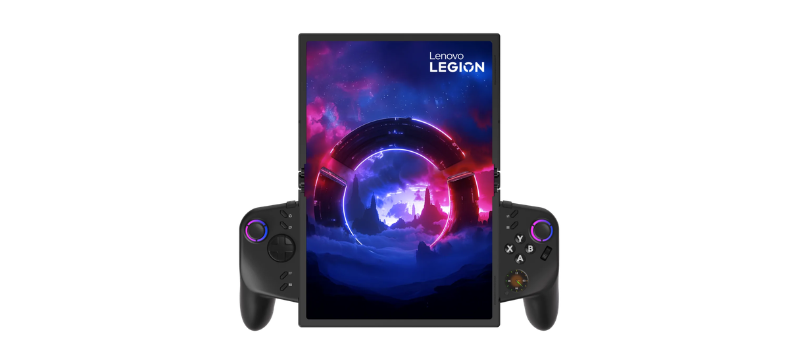
For years, the design of portable consoles seemed to have reached a point of stability. Increasingly larger screens, more powerful hardware and better-optimized systems had defined a formula that brands like Nintendo, Valve or ASUS have continued refining. However, innovation rarely stops in the tech industry. Lenovo has decided to explore a different path with Lenovo Go Fold, a proposal that introduces an unexpected element in portable gaming: a foldable design.
The idea of a console that can be folded in half immediately recalls the recent evolution of smartphones with flexible displays. Bringing that concept to the portable gaming sector raises interesting questions about ergonomics, portability and new ways to play. Can a foldable format improve the user experience or is it simply a technological experiment? That is precisely the question many enthusiasts are asking themselves.
With Lenovo Go Fold, the company seems to be seeking something more than a simple aesthetic variation. The device suggests a different approach to portable entertainment, where the flexible screen could allow greater transport convenience without sacrificing size or visual quality during play. In addition, this approach opens the door to new interaction formats and a more versatile use of the device.
In this analysis we examine exactly what this foldable portable console proposes, what its possible advantages are, and what impact it could have on the evolution of portable gaming. Because when a manufacturer decides to break with the established, it is always worthwhile to take a close look at what it is trying to build.
Lenovo Go Fold: tablet, console and portable in a single gaming device
The Lenovo Go Fold breaks with the traditional idea of what a portable console should be. Instead of sticking to a single format, this device combines several technological categories in one unit. It is not only a gaming console, nor is it just a powerful tablet or a compact laptop. In reality, it brings all those functions together in a single adaptable design intended for different usage scenarios.
The core of the concept is a large gaming tablet with a foldable screen, capable of folding in half to facilitate transport. When deployed, it offers a wide surface reminiscent of a professional-style tablet, similar to the Surface devices approach. However, by adding the attachable physical controls, the device completely changes its character and behaves like a handheld console closer to the experience of devices like the Steam Deck.
One of the most interesting aspects is its modular control system. The controls can be fixed to the sides of the tablet for direct play, but they can also be separated and used as an independent controller. This detail broadens the usage possibilities, especially when the screen rests on a table or stand. Additionally, the device allows playing in both landscape and portrait orientation, something uncommon in portable consoles and that opens the door to new ways of interacting with certain titles.
Versatility doesn’t end there. By running Windows, the Lenovo Go Fold can transform into a small travel laptop by adding a keyboard as an accessory. In that format, the device stops being solely a gaming platform and becomes a productivity device capable of running desktop applications, browsing, or working with everyday tools.
Lenovo has even incorporated a curious detail in one of the controllers: it can be placed on a specific base to function as a trigger mouse, a solution designed for games that require greater precision, such as shooters or strategy titles.
That said, since it is still a developing concept, there are certain aspects that hint at room for improvement. The anchoring system for the controls, for example, requires removing a small lock, sliding the controller along a rail, and pulling it outward. The mechanism works, but conveys a certain delicacy. The rail travel isn’t very long and can give the impression that the fit isn’t as solid as would be ideal.
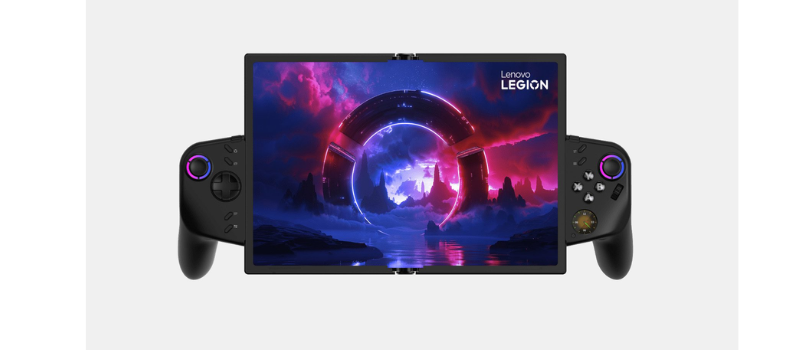
The size of the device also comes into play. As a relatively large and heavy tablet, holding it during long sessions could be less comfortable than with other more compact portable consoles. The experience is likely to improve when used resting on a surface.
Still, the concept demonstrates something interesting: Lenovo is exploring a new hybrid category within portable gaming, where the flexibility of the format is as important as the hardware’s power. And if this idea materializes into a final product, it could open the door to a different way of understanding portable consoles.
Foldable screen on a portable console: Lenovo’s boldest bet yet — analysis
One of the most striking elements of the Legion Go Fold concept is, without a doubt, its foldable pOLED screen. It’s already curious to see a gaming tablet with attachable physical controls on both sides, but when the panel folds in half the proposal reaches another level of experimentation within portable gaming presented at MWC. This conceptual device points to what could be a new generation of portable consoles with flexible screens, something Lenovo is exploring with future platforms planned as far as 2026.
The size of the device makes folding visually impactful. When folded, the tablet becomes a more compact and manageable form, something that improves comfort when used for extended gaming sessions. In that sense, folding isn’t just a flashy detail: it also serves a practical function, as it allows expanding the playing surface when deployed, while closing brings it closer to the idea of a compact gaming laptop. The large-inch pOLED flexible screen reinforces precisely that duality between console and tablet.
Regarding hardware, the concept points to powerful configurations based on processors such as the Intel Core Ultra 7 258V, paired with 32 GB of RAM, a technological base that would allow running PC games and services linked to the Xbox ecosystem or platforms compatible with AMD and Intel Arc 140V on next-generation integrated graphics. All of this within a device that aims to combine the best of desktop with the portability of a modern portable console.
That said, the system isn’t without compromises. The folding mechanism leaves a fairly thick edge and the panel remains partially exposed when closed. It isn’t the most elegant solution from a design perspective, but it seems to be the most viable way to keep a flexible touchscreen functioning correctly in different positions.
Beyond the hardware, the biggest challenge appears in the software. The Legion Go Fold Concept uses Windows, and the operating system isn’t yet fully prepared to adapt to a device with so many possible configurations. During testing, some problems related to screen orientation were observed, especially when the device is used in vertical format. The system doesn’t always adjust the interface correctly, which can affect the user experience in this hybrid between gaming tablet and laptop.
Small inconveniences also arose when resizing windows or interacting with the touchscreen and certain controller buttons. These are flaws that clearly reflect the experimental nature of the device shown at MWC, a proposal where Lenovo seems to want to test how far it can expand the concept of a portable console by combining foldable screen, detachable parts, and hybrid usage modes.
Still, not everything revolves around the screen. The design of the controls is one of the best-implemented aspects of the concept. The controls feel comfortable, the buttons have good layout, and one of the controllers even includes a small additional screen that adds a distinctive touch to the set. Coupled with the possibility of using them in several ways, the control system demonstrates notable versatility, something Lenovo has already explored in other Legion Go devices.
The Legion Go Fold concept with a pOLED screen, Intel Core Ultra 7 258V processor, up to 32 GB of RAM, and Intel Arc 140V graphics represents a very interesting experiment within the portable gaming console sector. It may not yet offer the most polished experience, but it makes clear that Lenovo is exploring new ways to combine a laptop, handheld console, and gaming tablet in a single device. And just for that, this concept shown at MWC deserves careful attention within the future of portable gaming that could materialize by 2026.
A promising concept that points to the future of portable gaming
Although the Lenovo Go Fold is still seen as a developing concept, the idea behind the device is surprisingly stimulating. Lenovo has shown on several occasions that it isn’t afraid to experiment with new formats, and this proposal reinforces that. The combination of foldable tablet, portable console and hybrid device shows a creative approach that aims to expand the boundaries of today’s portable gaming.
It’s true that playing with a tablet of this size fully unfolded may not be the most comfortable option during long sessions. The weight of the device and the presence of attached physical controls on the sides make the whole setup bulkier than other traditional portable consoles. However, this kind of prototype doesn’t necessarily aim to deliver a definitive experience, but to explore new possibilities and assess how far the format can evolve.
In that sense, the Lenovo Go Fold functions almost like an innovation lab within the brand’s gaming ecosystem. Lenovo has already shown with the Legion Go line that it masters the portable console format with detachable controllers, and it’s highly likely that many of the ideas tested in this concept will influence future commercial devices.
For example, some details present in the design could become real improvements for upcoming generations. The versatility of the controls, their modular system, or even the possibility of adding extra elements —such as small screens or additional functions on the controls— are ideas that could evolve into more refined solutions.
Additionally, Lenovo has earned a certain reputation within the PC space for presenting innovative products that, while sometimes starting as prototypes, end up setting trends. The company tends to bet on emerging technologies and unconventional designs, something that often ends up driving new device categories.
.png)
That’s why, although combining a foldable tablet with console controls may seem like an ambitious proposition, it wouldn’t be strange for some of its concepts to end up taking shape in future products. Many of the innovations that today seem experimental are born precisely in these kinds of projects.
The Lenovo Go Fold, unlike the Lenovo Legion Go Fold, shows that portable gaming still has room to evolve. This particular model may not arrive exactly in stores with this format, but the ideas it introduces could influence the next generation of devices. And if anything is clear after seeing it in action, it’s that Lenovo remains willing to explore different paths to redefine how we play anywhere.
Conclusion: a bold idea that points to the future of portable gaming
The Lenovo Go Fold isn’t a conventional portable console, and that is precisely its greatest appeal. This device proposes a different vision of portable gaming by combining foldable screen, tablet format, detachable controls, and Windows compatibility in a single unit. It may still be an experimental concept, but it clearly shows that the sector still has room to innovate.
Throughout the analysis it becomes clear that Lenovo is not simply trying to replicate what already exists. With the Go Fold it aims to explore new ways to play and interact with a portable device. The ability to use it as a console, as a tablet, or even as a small laptop opens interesting possibilities for those seeking versatility in a single device.
It is true that there are still aspects that need evolution. Ergonomics, software integration with such a flexible format, and some design details show that the concept is still in the exploratory phase. However, these prototypes play an important role: they allow testing ideas that could significantly improve future generations of gaming devices.
Lenovo has already shown with the Legion Go family that it knows how to build solid hardware within portable gaming. Therefore, everything learned with this concept could transfer to more refined commercial products. Features such as modular controls, new forms of interaction, or even elements inspired by the flexible screen could end up being part of future devices.
Beyond its immediate viability, the Lenovo Go Fold leaves a clear impression: portable gaming is still evolving. And when a manufacturer dares to experiment with different formats, the result often opens up new ideas for the entire industry.
Maybe this foldable console won’t arrive exactly in stores with this design, but what it represents is much more interesting: a glimpse of what the next generations of devices for playing anywhere could look like.